






How to use gobos and textures in theatre lighting design?
- Understanding Stage and Theatre Lighting
- 1. What Are the Main Types of Stage Lighting Fixtures?
- 2. How Do Gobos and Textures Enhance Theatre Lighting Design?
- 3. What Are the Key Lighting Angles and Their Effects?
- 4. How Do LED Stage Lighting Fixtures Compare to Traditional Lighting?
- 5. What Should Be Considered When Purchasing LED Stage Lighting?
- 6. How Do Lighting Angles and Positions Affect Stage Design?
- 7. What Are the Benefits of Using LED Fixtures in Theatre Lighting?
- 8. How Do Gobos and Textures Enhance Theatre Lighting Design?
- Conclusion: Why Choose LQE for Your LED Stage Lighting Needs?
Lighting plays a pivotal role in theatrical productions, shaping the audience's experience and enhancing storytelling. For those in the LED stage lighting industry, understanding the nuances of stage and theatre lighting is crucial when making informed purchasing decisions.
Understanding Stage and Theatre Lighting
Stage and theatre lighting involves the strategic use of light to illuminate performers, set pieces, and the overall environment, creating mood, focus, and visual interest. The primary objectives include ensuring visibility, guiding audience attention, setting the emotional tone, and supporting the visual style of the production.
1. What Are the Main Types of Stage Lighting Fixtures?
Selecting the appropriate lighting fixtures is essential for achieving desired effects. Common types include:
Spotlights: Provide focused, intense light, ideal for highlighting performers or specific areas.
Floodlights: Offer broad, soft illumination, suitable for general stage coverage.
Fresnels: Produce soft-edged beams, adjustable for subtle lighting transitions.
Ellipsoidals (Lekos): Deliver sharp, controllable beams, often used with gobos to project patterns.
PAR Lights: Versatile fixtures that can produce a variety of looks, from concentrated beams to soft washes.
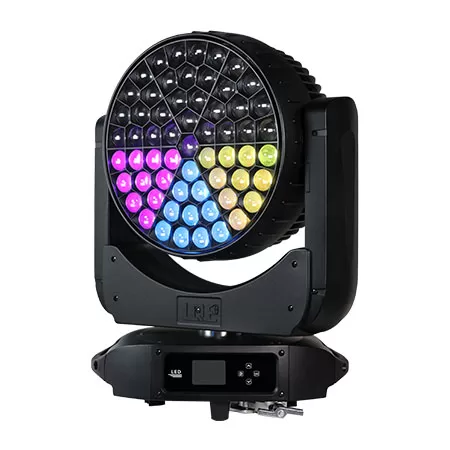
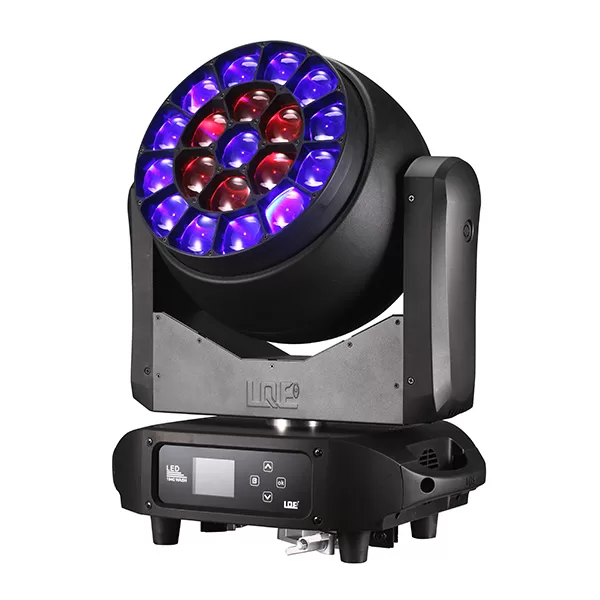
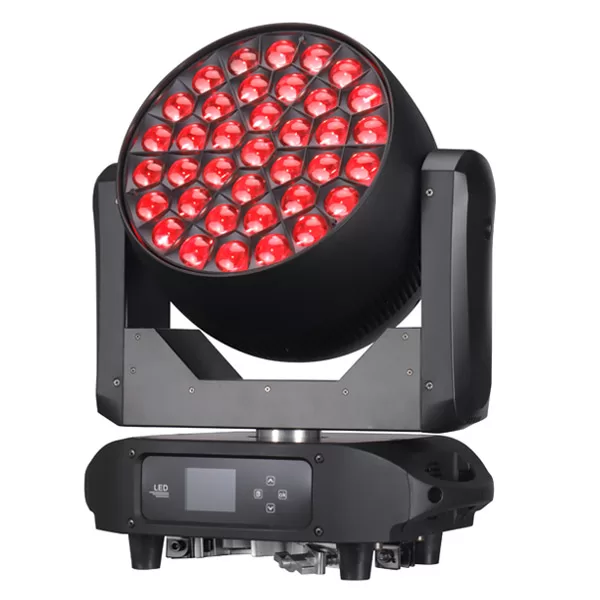
LED Fixtures: Energy-efficient and flexible, offering dynamic color mixing without the need for gels.
2. How Do Gobos and Textures Enhance Theatre Lighting Design?
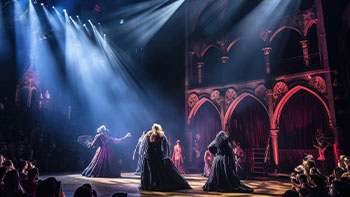
Gobos are templates placed in front of a light source to project patterns or textures onto the stage. They can create visual interest, simulate natural elements, or reinforce thematic elements of the production. For example, using a gobo to project leaf patterns can evoke a forest setting. Combining gobos with different lighting angles and colors can further enhance the desired effect.
3. What Are the Key Lighting Angles and Their Effects?
The positioning of lights significantly impacts the stage's appearance:
Front Light: Provides clear visibility but can appear flat if not combined with other angles.
Side Light: Adds depth and dimension, highlighting movement and texture.
Back Light: Creates silhouettes and dramatic effects, adding mood and depth.
Top Light: Offers focused illumination but may cast strong shadows on faces.
Up Light: Produces dramatic, unnatural effects, suitable for special scenes.
4. How Do LED Stage Lighting Fixtures Compare to Traditional Lighting?
LED lighting offers several advantages over traditional fixtures:
Energy Efficiency: LEDs consume less power, reducing operational costs.
Low Heat Emission: Minimizes the need for additional cooling systems.
Color Mixing Capabilities: LEDs can produce a wide range of colors without the need for gels.
5. What Should Be Considered When Purchasing LED Stage Lighting?
When selecting LED stage lighting, consider the following factors:
Brightness and Intensity: Ensure the fixtures provide adequate illumination for the stage size and desired effects.
Color Rendering: Opt for fixtures with high color rendering indices (CRI) to accurately represent colors.
Beam Angle and Focus: Choose fixtures with adjustable beam angles and focus to achieve desired lighting effects.
Control Compatibility: Verify that the fixtures are compatible with existing lighting control systems.
Durability and Maintenance: Select fixtures known for reliability and ease of maintenance to ensure longevity.
6. How Do Lighting Angles and Positions Affect Stage Design?
The placement and angle of lighting fixtures are crucial for achieving the desired visual effects:
Front Lighting: Provides clear visibility but can appear flat if not combined with other angles.
Side Lighting: Adds depth and dimension, highlighting movement and texture.
Back Lighting: Creates silhouettes and dramatic effects, adding mood and depth.
Top Lighting: Offers focused illumination but may cast strong shadows on faces.
Up Lighting: Produces dramatic, unnatural effects, suitable for special scenes.
7. What Are the Benefits of Using LED Fixtures in Theatre Lighting?
LED fixtures offer several advantages in theatre lighting:
Energy Efficiency: LEDs consume less power, reducing operational costs.
Low Heat Emission: Minimizes the need for additional cooling systems.
Color Mixing Capabilities: LEDs can produce a wide range of colors without the need for gels.
8. How Do Gobos and Textures Enhance Theatre Lighting Design?
Gobos are templates placed in front of a light source to project patterns or textures onto the stage. They can create visual interest, simulate natural elements, or reinforce thematic elements of the production. For example, using a gobo to project leaf patterns can evoke a forest setting. Combining gobos with different lighting angles and colors can further enhance the desired effect.
Conclusion: Why Choose LQE for Your LED Stage Lighting Needs?
LQE offers a comprehensive range of high-quality LED stage lighting solutions tailored to meet the diverse needs of theatrical productions. With a focus on energy efficiency, durability, and innovative design, LQE ensures that your lighting setup enhances the visual storytelling of your performance. Our expert team provides personalized consultation to help you select the perfect fixtures, ensuring optimal performance and value for your investment.
Distributor
What types of companies can become LQE distributors?
We welcome partnerships with companies that have experience in the entertainment, AV, lighting, or stage equipment industries. Whether you are a local reseller, importer, system integrator, or project contractor, we are open to exploring win-win cooperation.
Do you offer OEM/ODM support for distributors?
Yes, as a professional OEM/ODM manufacturer, we support brand customization, including logo printing, packaging design, and even custom features based on project needs.
Is there a minimum order quantity (MOQ) to become a distributor?
MOQ requirements vary based on the product line and market region. However, for long-term distribution partnerships, we are flexible and can start with a trial order to build trust.
1000w
Does LQE Offer Customized Stage Moving Light Solution?
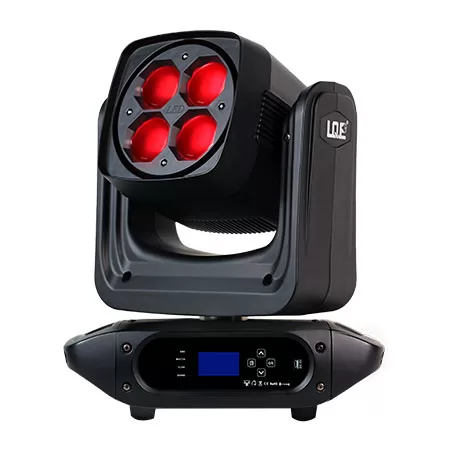
An experienced R&D team can provide customized digital stage lighting OEM/ODM solution service to meet clients’ unique demands from global markets, such as customized CRI parameter, Ingress protection rating, effect, etc.
Can I Have a Sample Order for an LED DJ Light?
Sure, sample order are welcome to test and check LQE quality. Mixed samples are acceptable.
Want to learn more information?
[Reach out to us and receive professional guidance, a personalized quote, and the best solution for your needs.]
LQE is a professional LED stage lighting manufacturer, focusing on OEM/ODM and high-end customization.
◼ Contact LQE
Email: nana@lqelighting.com
WhatsApp: +86 198 7848 9298
Address: No. 8 Road Liguan, Guanyao, Nanhai District, Foshan, China.
Linkedin
YouTube
Whatsapp: +8618924548390
TikTok