





High-Power LED Follow Spot Lights: The Ultimate Technical Guide

Monday, 01/6/2025

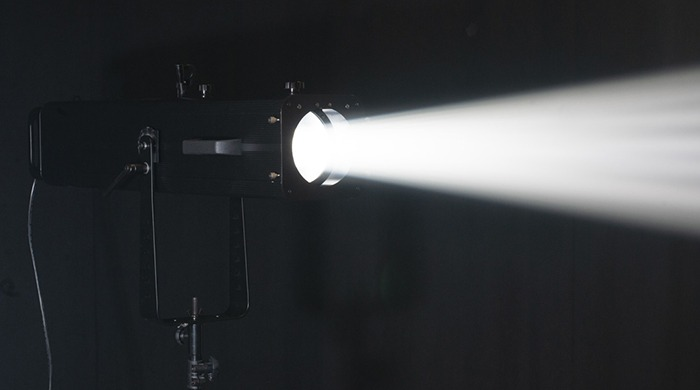
This article explores high-power LED follow spot lights, focusing on long-throw performance, high CRI color accuracy, DMX control, and real-world applications in theaters, stadiums, and live broadcast productions.

Introduction: Beyond the Basics of Stage Lighting

The year 2025 marks a definitive tipping point in the entertainment lighting industry. The era where heavy, heat-intensive HMI (Hydrargyrum Medium-arc Iodide) and halogen fixtures dominated the "front of house" positions is rapidly fading. In their place, High-Power LED follow spot lights have matured from experimental alternatives to the industry standard for stadiums, opera houses, and broadcast studios.

For professional technical directors and lighting designers, the transition to LED is no longer just about saving energy—it is about gaining unprecedented control. However, the market is flooded with specifications that can be misleading. A 600W LED engine today can often outperform a 1200W discharge lamp of the past, but raw wattage tells only a fraction of the story.

The modern buyer must look beyond simple power consumption. You are now navigating a complex ecosystem of high lumen stage lighting where thermal management, spectral fidelity, and control protocols define the success of a production. This guide is written for professionals who need to understand the physics and engineering behind the fixture, ensuring that the equipment specified today remains relevant for the next decade of production.

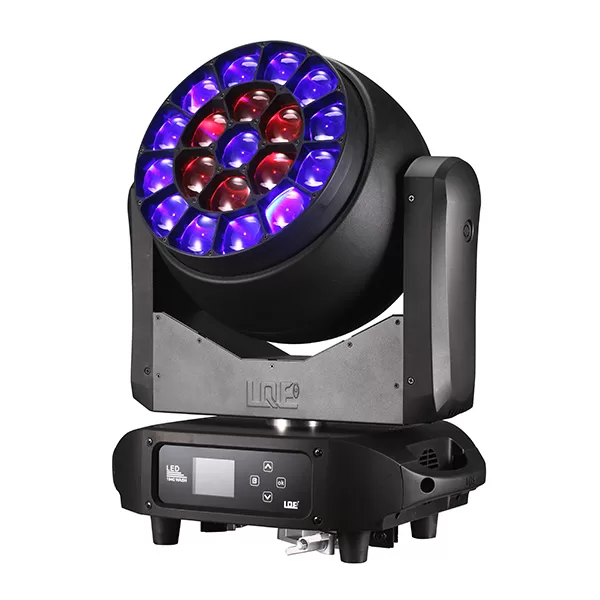
moving head beam light (4)

The Core Trade-Off: High Brightness vs. High CRI/TLCI

One of the most critical decisions in specifying a follow spot is managing the inherent trade-off between raw output (intensity) and color fidelity. To make an informed choice, we must delve into the metrics that define how we see light and how cameras record it.

Understanding Lumen Output for Long-Range Visibility

When we talk about "punch" in a large arena, we are discussing Luminous flux, measured in lumens. In simple terms, this is the total amount of light energy emitted by the source. However, for a follow spot, Total Lumens is less important than Center Beam Intensity (measured in Candelas).

High-efficiency LED emitters (often cool white, around 6500K-8000K) prioritize photon output over spectral balance. These "High Output" engines are designed to cut through the ambient wash of a rock concert or a stadium event. They are brutally bright but often suffer from spectral gaps, particularly in the red spectrum.

Deep Dive into Color Rendering Index (CRI) >95Ra

For theater, opera, and corporate events where a speaker's face is the focal point, brightness takes a backseat to color accuracy. This is where the stage lighting CRI vs TLCI debate begins.

The Color Rendering Index (CRI) is the traditional metric used to evaluate how a light source reveals the colors of objects compared to a reference light source (like daylight).

· Ra (Average CRI): Most manufacturers quote this. A value of >95Ra implies excellent color rendering across 8 pastel colors.

· R9 (Saturated Red): This is the "hidden" metric professional lighting directors must demand. The standard Ra calculation does not include R9. A cheap LED might have a CRI of 95 but an R9 of only 20. For skin tones to look healthy and for costumes to look vibrant, you need a high R9 value (ideally >90).

TLCI (Television Lighting Consistency Index): Why it Matters for Broadcast

In 2025, almost every major live event is hybrid—watched by a live audience and streamed to thousands online. Human eyes and camera sensors perceive light differently. This discrepancy led the European Broadcasting Union to develop the Television Lighting Consistency Index (TLCI).

While CRI is based on human color perception, TLCI simulates the response of a standard 3-chip camera sensor.

· The Problem: A high-CRI light can still look green or magenta on a camera sensor due to "spikes" in the LED spectrum that the eye smooths over but the camera accentuates.

· The Solution: Professional LED spots often specify both. If you are lighting for IMAG (Image Magnification) screens or Netflix specials, a TLCI score of <85 will require significant post-production color grading or live camera shading. Always aim for TLCI >90 for broadcast workflows.

Side-by-Side Comparison: When to Prioritize Intensity over Fidelity

Feature

High-CRI/TLCI Model

High-Output (Standard) Model

Typical Application

Theater, Opera, TV Studio, Fashion Shows

Rock Concerts, Stadium Sports, Outdoor Festivals

Luminous Efficacy

Lower (Phosphors absorb light to correct color)

Maximum (Raw photon throughput)

Throw Distance

Short to Medium (30m - 60m)

Extreme Long Throw (50m - 100m+)

Skin Tone Rendering

Natural, healthy warmth

Can appear "flat" or slightly ghostly

Critical Optical Parameters: Throw Distance and Beam Angles

The optical train of a follow spot is just as important as the LED engine. A 1000W LED is useless if the optics cannot collimate that light into a tight, coherent beam over long distances.

Calculating Effective Throw Distance using Photometric Data

To determine if a specific fixture works for your venue, you must apply the Inverse-square law. This law of physics states that the intensity of light is inversely proportional to the square of the distance from the source.

The Math in Practice:
If a fixture delivers 20,000 Lux at 10 meters:

· At 20 meters (2x distance), you don't get half the light; you get one-quarter (1/2²). Result: 5,000 Lux.

· At 40 meters (4x distance), you get one-sixteenth (1/4²). Result: 1,250 Lux.

When calculating the LED follow spot throw distance, you must work backward from your target illuminance.

· Requirement: A standard TV face light requires roughly 1,000 to 1,500 Lux (approx 100-150 fc).

· Calculation: Check the manufacturer's photometric chart. Does the light deliver >1,000 Lux at the actual physical distance of your follow spot bridge? If the chart says 500 Lux, no amount of gain on the camera will fix the noise introduced by a dark image.

Understanding Zoom Range (e.g., 3°-12°) for Versatile Staging

Unlike fixed-beam par lights, follow spots rely on a complex zoom lens system.

· Long Throw (2° - 5°): Essential for arena rigs where the spot ops are located on the "catwalk" hundreds of feet away. High-quality optics are required here to prevent "chromatic aberration" (halo effects) at the edge of the beam.

· Short/Medium Throw (8° - 22°): Used in black box theaters or side-stage positions.

A wider zoom range adds versatility but often reduces total light transmission due to the increased number of glass elements in the optical path.

Iris Control and Edge Shaping

Precision is the hallmark of a good spot operator. The iris mechanism must be made of heat-resistant steel leaves that can close to a near-zero point without warping.

· Soft vs. Hard Edge: High-end units include a variable frost filter (linear frost) or a dedicated focus lens that allows the operator to soften the edge of the beam. This is crucial for blending the spot into the general stage wash, avoiding the "hard circle" look unless a specific dramatic effect is desired.

Professional Control and Operation Features

In the past, the "spot op" was an island, communicating only via headset. Today, the follow spot is an integrated part of the lighting network.

DMX 512 Protocols: Integrating Follow Spots into the Master Console

Modern High-Power LED fixtures are fully fully controllable via DMX512. This allows the Lighting Designer (LD) at the main console to override local control.

· Remote Dimming: The LD can cap the maximum intensity. If the scene calls for 50% brightness, the spot op cannot accidentally blow out the scene.

· Color Temperature Control (CTO): With Variable White LED engines, the LD can shift the color temperature from 6000K (Daylight) to 3200K (Tungsten) via DMX to match the rest of the rig.

· Blackout: In a cue sequence, the console can trigger a snap blackout for all spots simultaneously, ensuring perfect timing that manual operators can rarely match.

DMX 512 spotlight control is no longer a luxury; it is a workflow necessity for complex cues.

Linear Dimming Curves: Ensuring Smooth Fades

LEDs naturally turn on and off instantly. To mimic the pleasing "decay" of a halogen filament, manufacturers use sophisticated software algorithms.

· 16-bit Dimming: Standard DMX uses 8-bit (256 steps). This causes visible "stepping" at low light levels (e.g., fading from 10% to 0%). 16-bit dimming offers 65,536 steps, resulting in a silky smooth fade to black with no visible jitter.

· Dimming Curves: Look for fixtures that offer selectable curves (Linear, Square Law, S-Curve). Square Law is generally preferred for theater as it matches the human eye's non-linear perception of brightness changes.

Thermal Management: The Importance of Silent Fans

LEDs do not emit infrared heat forward like halogen bulbs, but the electronics generate massive heat at the rear of the diode. If this heat is not dissipated, the LED's life is shortened and color shift occurs (known as thermal droop).

This brings us to quiet cooling theater lights. In a symphony hall or opera, the audience can hear a pin drop. A cooling fan roaring at 45dB is unacceptable.

· Technology: Look for units utilizing copper heat pipes and large heatsinks assisted by low-RPM, high-volume fans.

· Silent Mode: Many pro fixtures feature a DMX-selectable "Silent Mode" or "Theater Mode." This reduces the fan speed (and consequently limits the maximum brightness to approx. 70%) to ensure near-silent operation (<25dB) during quiet passages.

Selection Scenarios: Matching the Light to the Venue

To synthesize this technical data, let’s look at two distinct selection profiles.

Scenario A: Large Outdoor Concerts (Priority: Max Lumens/Throw)

· Venue: Football Stadium or Festival Main Stage.

· Challenge: The throw distance is 80+ meters. The stage is awash in high-intensity moving heads and video walls.

· The Fix: You need high lumen stage lighting with a narrow beam angle (2°-4°).

· Key Spec: Cold White LED (6500K-8000K), >40,000 Lumens output. CRI is secondary (70Ra is acceptable). Manual control is often preferred for tracking fast-moving artists, though DMX intensity override is useful.

Scenario B: Opera Houses and TV Studios (Priority: High CRI/Silent Operation)

· Venue: 2,000-seat Opera House or 4K Broadcast Studio.

· Challenge: The camera or audience is close. Skin tones must look flawless. The environment is acoustically sensitive.

· The Fix: A High-CRI/TLCI unit with advanced thermal management.

· Key Spec: Variable Color Temperature (3200K-6000K), CRI >97Ra, TLCI >96. "Silent Mode" cooling is mandatory.

· Installation Tips: Mount these units at a shallower angle (approx 30-45 degrees from the stage deck) to avoid "raccoon eyes" (shadows in eye sockets), which are exacerbated by high-contrast LED sources.

Conclusion

Choosing the right High-Power LED follow spot light requires balancing raw power with optical precision. The days of simply asking "how many watts is it?" are over. Whether you need the extreme LED follow spot throw distance of a high-brightness model for stadiums or the nuance of a High-CRI unit for HD broadcasting, the specifications tell the true story.

Prioritizing technical specs like heat dissipation (for quiet cooling theater lights), DMX 512 spotlight control capability, and verifying photometric data against the Inverse-square law will ensure your production shines. Do not compromise on the optical chain; a great LED engine is wasted behind poor glass. Upgrade your rig with equipment that meets professional standards, and your operators—and audience—will thank you.

FAQs

What is the difference between CRI and TLCI in LED follow spots?
CRI (Color Rendering Index) measures how a light source reveals colors compared to natural light, which is critical for human eyes in theater contexts. TLCI (Television Lighting Consistency Index) is a standard specifically for cameras, ensuring colors look accurate on video broadcasts. Professional LED spots often specify both, as a light can look good to the eye (High CRI) but look green or pink on camera (Low TLCI).

How do I calculate the throw distance needed for my venue?
Throw distance is determined by the Inverse-square law using the fixture's lux or candela rating. You need to verify the manufacturer's photometric data to ensure the light delivers the required foot-candles or Lux at the specific physical distance from your lighting bridge to the stage. Never guess; use the charts.

Why is fan noise important when choosing a follow spot?
In acoustic environments like operas, plays, or classical concerts, the hum of a cooling fan can be distracting to the audience and performers. High-end quiet cooling theater lights feature intelligent cooling systems, heat pipes, or DMX-controlled 'silent modes' that lower fan RPM to minimize noise (often below 25dB) while managing the heat of the high-power LED engine.

Can I control a follow spot light via DMX?
Yes, modern professional High-Power LED follow spots support DMX512 protocols. This allows lighting designers to control dimming, color temperature, and sometimes iris size remotely from the main lighting console, ensuring perfectly timed fades and color matches with the rest of the rig.

Contact Us

Ready to upgrade your venue's lighting precision? Contact us today for a personalized photometric consultation and find the perfect High-Power LED solution for your stage.

Recommended for you
LED Moving Head Spot Light LS400S 1 - LQE

LED Moving Head Spot Light LS400S

LED Moving Head Spot Light LS400S
1000w White Light Engine RGBW Theatrical Follow Spot Zoom FS1000 ( CE approval ) 1 - LQE

1000w White Light Engine RGBW Theatrical Follow Spot Zoom FS1000 ( CE approval )

1000w White Light Engine RGBW Theatrical Follow Spot Zoom FS1000 ( CE approval )
1600w White Light Engine RGBYOP Theatrical Follow Spot Zoom FS1600 Hi-CRI ( CE approval ) 1 - LQE

1600w White Light Engine RGBYOP Theatrical Follow Spot Zoom FS1600 Hi-CRI ( CE approval )

1600w White Light Engine RGBYOP Theatrical Follow Spot Zoom FS1600 Hi-CRI ( CE approval )
Multi Colored LED Stage Light OD648 1 - LQE

Multi Colored LED Stage Light OD648

Multi Colored LED Stage Light OD648
Stage Moving Head Beam Light LB300 1 - LQE

Stage Moving Head Beam Light LB300

Stage Moving Head Beam Light LB300
Prdoucts Categories
FAQ
1000w
Can I Have a Sample Order for an LED DJ Light?

Sure, sample order are welcome to test and check LQE quality. Mixed samples are acceptable.

Do You Supply After-Sale Service?

LQE lighting offers 7x24 hrs systematic SOP customer support with dedicated personnel, ensuring quick and comprehensive assistance for stage lighting needs.

What Kind of Certificates You Offer?

All kinds of certificates could be offered by LQE digital moving light factory, which depends on customer’s required, different pricing plan for different approval.

Distributor
What is your typical lead time for distributor orders?

Our standard production lead time is 15–30 working days depending on order volume and customization requirements. For stocked models or repeat orders, we can offer shorter delivery times.

What support does LQE offer to its distributors?

We provide our distributors with a full package of support, including:
Marketing materials and product catalogs
Technical training and manuals
Fast-response after-sales service
Exclusive regional pricing and policies (for qualified partners)
Priority access to new products and updates

You may also like
LED Moving Head Spot Light LS400S 1 - LQE
LED Moving Head Spot Light LS400S
1000w White Light Engine RGBW Theatrical Follow Spot Zoom FS1000 ( CE approval ) 1 - LQE
1000w White Light Engine RGBW Theatrical Follow Spot Zoom FS1000 ( CE approval )
1600w White Light Engine RGBYOP Theatrical Follow Spot Zoom FS1600 Hi-CRI ( CE approval ) 1 - LQE
1600w White Light Engine RGBYOP Theatrical Follow Spot Zoom FS1600 Hi-CRI ( CE approval )
Multi Colored LED Stage Light OD648 1 - LQE
Multi Colored LED Stage Light OD648

Want to learn more information?

[Reach out to us and receive professional guidance, a personalized quote, and the best solution for your needs.]

Name must not exceed 100 characters.
Invalid email format or length exceeds 100 characters. Please re-enter.
Please enter a valid phone number!
Company Name must not exceed 150 characters.
Content must not exceed 3000 characters.
Contact customer service

How can we help?

Hi,

If you are interested in our products/customized or have any doubts, please be sure to let us know so that we can help you better.

×
Name must not exceed 100 characters.
Invalid email format or length exceeds 100 characters. Please re-enter.
Please enter a valid phone number!
Company Name must not exceed 150 characters.
Content must not exceed 3000 characters.

Send My lighting requirements

Tell us your project type and the number of lamps required, and we will customize the most suitable solution and quotation for you.

×
Name must not exceed 100 characters.
Invalid email format or length exceeds 100 characters. Please re-enter.
Please enter a valid phone number!
Company Name must not exceed 150 characters.
Content must not exceed 3000 characters.

Get product quotes

Learn more about our high-quality stage lighting equipment and customized prices. Please contact us for exclusive solutions.

×
Name must not exceed 100 characters.
Invalid email format or length exceeds 100 characters. Please re-enter.
Please enter a valid phone number!
Company Name must not exceed 150 characters.
Content must not exceed 3000 characters.

Customize My Stage lighting

According to your scene and functional requirements, we can provide OEM/ODM customization services. Please fill in the form to get customized solutions.

×
Name must not exceed 100 characters.
Invalid email format or length exceeds 100 characters. Please re-enter.
Please enter a valid phone number!
Company Name must not exceed 150 characters.
Content must not exceed 3000 characters.

Download Our Product Catalog

Get detailed information about our stage lighting solutions, specifications, and customization options.

×
Name must not exceed 100 characters.
Invalid email format or length exceeds 100 characters. Please re-enter.
Please enter a valid phone number!
Company Name must not exceed 150 characters.
Content must not exceed 3000 characters.
DOWNLOAD